Executive Summary
In 2018, I was engaged to lead the strategic management and market expansion of an American Premium Shaved Ice Beverage Brand operating under an exclusive distribution agreement in the United Arab Emirates.
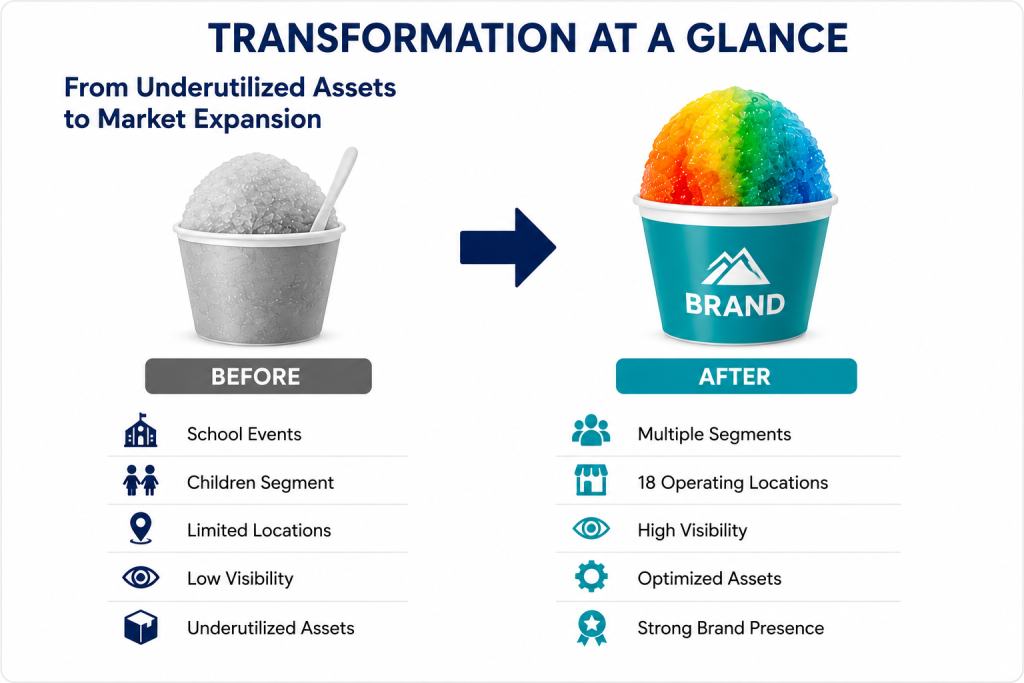
Despite offering a high-quality product and owning several branded mobile food units, the business had achieved only limited market penetration during its first two years of operation. Sales activities were primarily concentrated within school events and small sports-related activities, restricting both brand visibility and revenue growth.
Following a comprehensive strategic assessment, it became evident that the challenge was not the product itself but rather the market positioning, target audience selection, asset utilisation, pricing strategy, and overall customer experience.
A complete repositioning strategy was developed, including market redefinition, activation of underutilised brand assets, expansion into hospitality and leisure sectors, optimisation of pricing, and implementation of a structured growth plan.
Within the first year of execution, the brand successfully expanded to 18 operating locations, achieved approximately 120% sales growth between the initial and final phases of the rollout, and significantly increased its perceived market value. The success of the strategy ultimately contributed to the brand being sold at a value exceeding the investor’s original expectations.
This case study highlights how strategic positioning, asset optimisation, and experience-driven branding can unlock growth opportunities that often remain hidden within existing businesses.
Key Results at a Glance
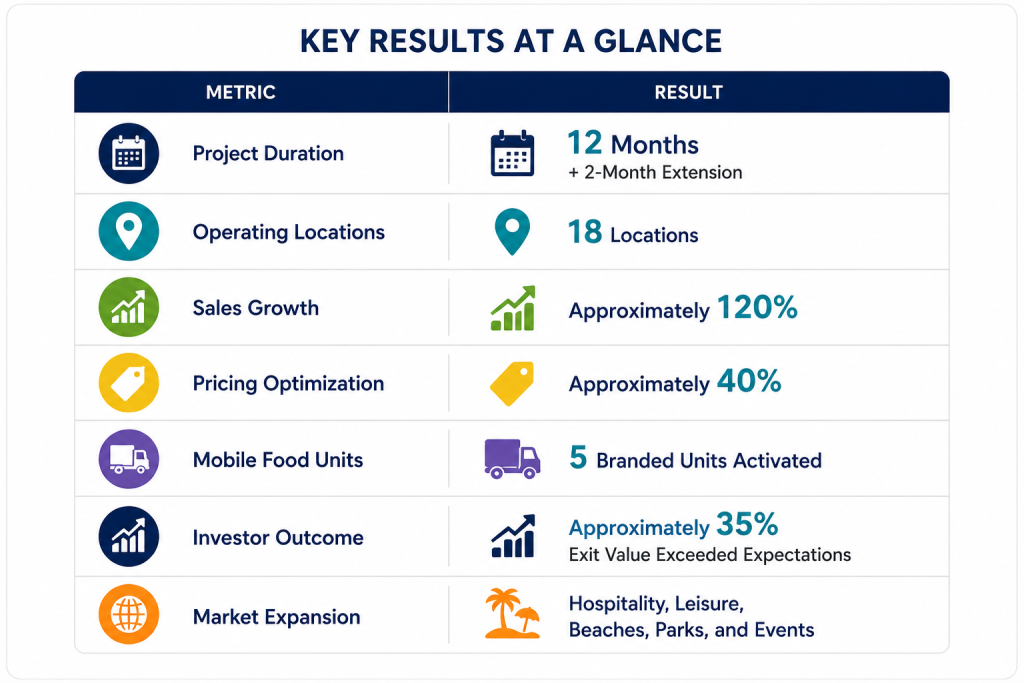
These results were achieved without changing the core product. The transformation came from repositioning the brand, activating underutilized assets, correcting market assumptions, and aligning the customer experience with higher-potential locations.
Strategic Challenge
Although the business owned a strong product, recognised brand assets, and specialised operating equipment, market penetration remained limited after two years of operation.
The challenge was not product quality.
The challenge was identifying why valuable assets, strong customer feedback, and brand potential were not translating into sustainable growth.
Background
About the Brand
In 2018, our company was engaged to lead the strategic management and growth development of an American premium shaved ice beverage brand operating under an exclusive distribution agreement in the United Arab Emirates.
The business owned several valuable assets, including specialised preparation equipment, branded mobile food units, and an established international brand identity. Despite these advantages, market penetration remained limited during its first two years of operation, with activities concentrated primarily in school events and small community activations.
The investor’s objective was to transform the business into a scalable growth platform capable of increasing market presence, improving commercial performance, and enhancing long-term enterprise value.
Strategic Assessment and Key Findings
Key Findings Summary
- Market positioning was too narrow.
- Valuable brand equity was underutilised.
- Existing assets were generating limited returns.
- Pricing did not reflect perceived value.
- Several high-potential markets were being ignored.
1. Market Positioning Was Too Narrow
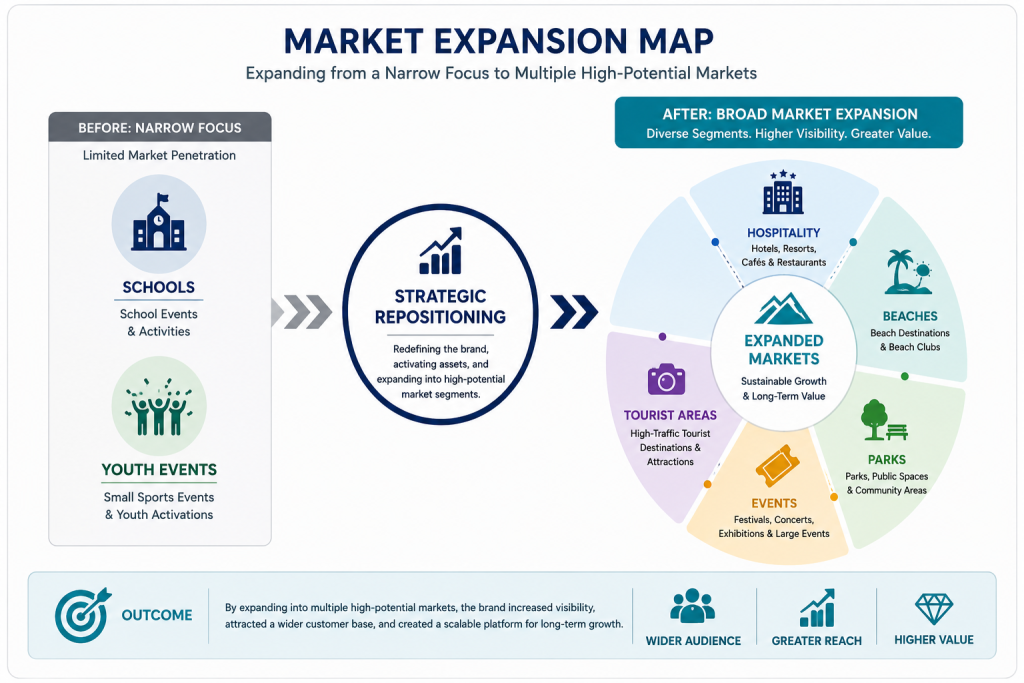
The brand had largely positioned itself as a children’s product and concentrated most of its activities within schools and youth-related events.
While children represented an important customer segment, limiting the brand to this audience significantly reduced its commercial potential and prevented broader market adoption.
The product’s appeal, preparation process, visual presentation, and experiential nature made it suitable for a much wider demographic that included families, tourists, young adults, hospitality guests, and leisure visitors.
2. Valuable Brand Equity Was Underutilised
As an established American brand, the business possessed a level of credibility, differentiation, and perceived quality that was not being fully leveraged within the local market.
Consumer research consistently showed that international food and beverage brands often benefit from stronger trust, curiosity, and trial rates when properly positioned.
However, this competitive advantage was not reflected in the existing marketing approach or expansion strategy.
3. Key Physical Assets Were Generating Minimal Return
One of the most significant findings was the underutilisation of the company’s existing branded mobile food units.
Although the business owned five specialised mobile food units designed to deliver the full brand experience, operational convenience had gradually shifted activities toward temporary table-based setups.
As a result, the company was effectively selling the product while leaving a major part of the brand experience unused.
This represented a substantial missed opportunity to strengthen visibility, customer engagement, and brand recall.
4. Pricing Did Not Reflect Perceived Value
The product was being sold at pricing levels significantly below comparable alternatives in the market.
This pricing approach had originally been adopted to support school-based sales activities and younger customer segments.
However, the strategy unintentionally reduced perceived value and positioned the product below its true market potential.
A comparative market analysis indicated that the product could support a significantly higher price point while remaining competitive.
5. High-Potential Markets Were Being Ignored
The assessment revealed several high-potential sectors that aligned naturally with the brand’s strengths, including:
- Hotels and resort swimming pools
- Public beaches
- Private beach facilities
- Public parks
- Family entertainment destinations
- Tourist attractions
- Outdoor leisure environments
- Seasonal events and festivals
These locations offered significantly higher customer traffic, stronger purchasing power, and greater alignment with the brand’s experiential nature.
Strategic Conclusion
The assessment ultimately led to a critical strategic conclusion:
- The business was not suffering from a product problem.
- It was suffering from a positioning, deployment, and market-selection problem.
- The product already possessed the quality required for success.
- What was missing was a strategy capable of connecting the brand’s strengths with the right audiences, locations, experiences, and commercial opportunities.
Strategic Repositioning and Growth Strategy
Based on the assessment findings, a comprehensive growth strategy was developed to reposition the brand, activate underutilised assets, and establish a scalable operating model capable of supporting long-term expansion.
Rather than focusing solely on increasing sales, the objective was to build a stronger and more valuable brand capable of generating sustainable growth while enhancing its future market value.
The strategy was built around five primary pillars.
1. Market Redefinition
The first step was to redefine the market opportunity.
Instead of positioning the brand primarily as a children’s product, the business was repositioned as an experience-driven leisure beverage brand capable of serving a broader customer base.
New target audiences were identified, including:
- Families
- Tourists
- Hotel guests
- Beach visitors
- Young adults
- Leisure and entertainment consumers
This shift significantly expanded the brand’s potential reach and opened access to entirely new customer segments.
2. Asset Activation Strategy
A detailed audit of the company’s physical and operational assets was conducted.
Several valuable assets had been receiving limited utilisation despite representing significant investments.
The strategy focused on activating:
- Branded mobile food units
- Preparation equipment
- Existing operational infrastructure
- Brand presentation assets
- Customer interaction elements
The objective was to transform existing assets from dormant resources into active growth drivers.
3. Pricing Optimisation
A comparative analysis of competing products and customer purchasing behaviour was conducted.
The findings indicated that the product was significantly undervalued relative to both its quality and customer experience.
A revised pricing structure was implemented to better reflect the product’s positioning while maintaining competitiveness within the market.
The new pricing model aligned the brand with its intended premium positioning and improved overall commercial viability.
4. Hospitality and Leisure Expansion
A structured market expansion program was developed to secure locations that aligned naturally with the brand experience.
Priority was given to environments where customers were already seeking leisure, recreation, entertainment, and outdoor social experiences.
Target locations included:
- Hotels and resorts
- Swimming pools
- Public beaches
- Private beach clubs
- Public parks
- Family entertainment destinations
- Tourism-focused venues
- Seasonal festivals and events
These locations provided stronger customer traffic, greater purchasing power, and higher brand visibility.
5. Experience-Led Brand Building
One of the most important strategic decisions was to shift the focus from product selling to experience creation.
The preparation process itself was identified as a unique competitive advantage.
Customers were encouraged to engage with the product preparation experience, creating higher levels of participation, enjoyment, and emotional connection.
This transformed a simple beverage purchase into a memorable customer experience that encouraged repeat visits, social sharing, and word-of-mouth promotion.
Strategic Execution Framework
To support implementation, a structured execution framework was established covering:
- Market development
- Site acquisition
- Operational planning
- Brand presentation standards
- Logistics coordination
- Staffing requirements
- Marketing activities
- Budget allocation
- Performance monitoring
This ensured that expansion decisions were guided by strategic priorities rather than opportunistic site selection.
Market Entry Challenges and Location Acquisition
While the strategic direction was clear, execution presented a different challenge.
The target sectors identified during the assessment including hotels, resorts, beaches, parks, and leisure destinations were highly competitive environments where established and well known brands often received priority treatment.
Many venue operators preferred recognized brands with proven market visibility, stronger customer demand, and established operating histories. As a relatively new entrant to the market, the brand faced understandable hesitation from potential location partners.
Securing premium operating locations therefore became one of the most critical challenges during the early stages of implementation.
Building Market Credibility
Rather than relying solely on presentations and sales discussions, a decision was made to create real-world proof of concept.
Through industry relationships and direct engagement with hospitality stakeholders, an opportunity was secured to operate one of the branded mobile food units at a hotel swimming pool environment.
The objective was not immediate revenue generation.
The objective was validation.
The location was fully prepared according to brand standards, including:
- Brand presentation and visual identity
- Staff appearance and customer interaction standards
- Product preparation experience
- Operational workflow
- Customer engagement activities
Visitors were invited to experience the product while observing and participating in elements of the preparation process.
This created a highly interactive environment that generated strong engagement among families, children, and leisure guests.
Gathering Customer Insights
To support future expansion efforts, structured customer feedback was collected during the activation.
Surveys and direct customer interviews were conducted to better understand:
- Product satisfaction
- Service quality perception
- Overall customer experience
- Emotional engagement with the preparation process
- Likelihood of repeat purchase
- Recommendation potential
The feedback consistently confirmed that customers perceived the experience as significantly more engaging than a traditional beverage purchase.
This insight reinforced one of the key conclusions of the assessment:
The experience itself represented a major component of the brand’s value proposition.
From Validation to Expansion
The activation generated valuable visual content, customer testimonials, operational data, and market insights.
These findings were consolidated into a professional business presentation that demonstrated:
- Customer engagement levels
- Product acceptance
- Operational capability
- Brand presentation standards
- Market potential
- Expansion opportunities
Rather than asking prospective location partners to trust projections, the business was now able to present evidence supported by real customer experiences and measurable feedback.
The impact was immediate.
Interest from hotels, leisure operators, event organizers, and public sector entities began to increase significantly.
Discussions that had previously been difficult to initiate became considerably easier once market validation and customer response could be demonstrated through tangible results.
Strategic Turning Point
This phase represented a critical turning point in the growth journey.
The challenge was no longer convincing stakeholders that the concept could work.
The challenge became selecting the most suitable opportunities from an increasing number of potential locations.
What initially started as a market-entry obstacle evolved into a scalable expansion platform supported by data, customer validation, and operational proof.
Expansion Results and Business Outcomes
The implementation phase was executed over a twelve-month management period, followed by a two-month extension to support ongoing expansion activities and operational stabilisation. Through strategic repositioning, disciplined execution, and experience-led brand development, the business achieved measurable improvements across market expansion, sales performance, asset utilisation, and enterprise value creation.
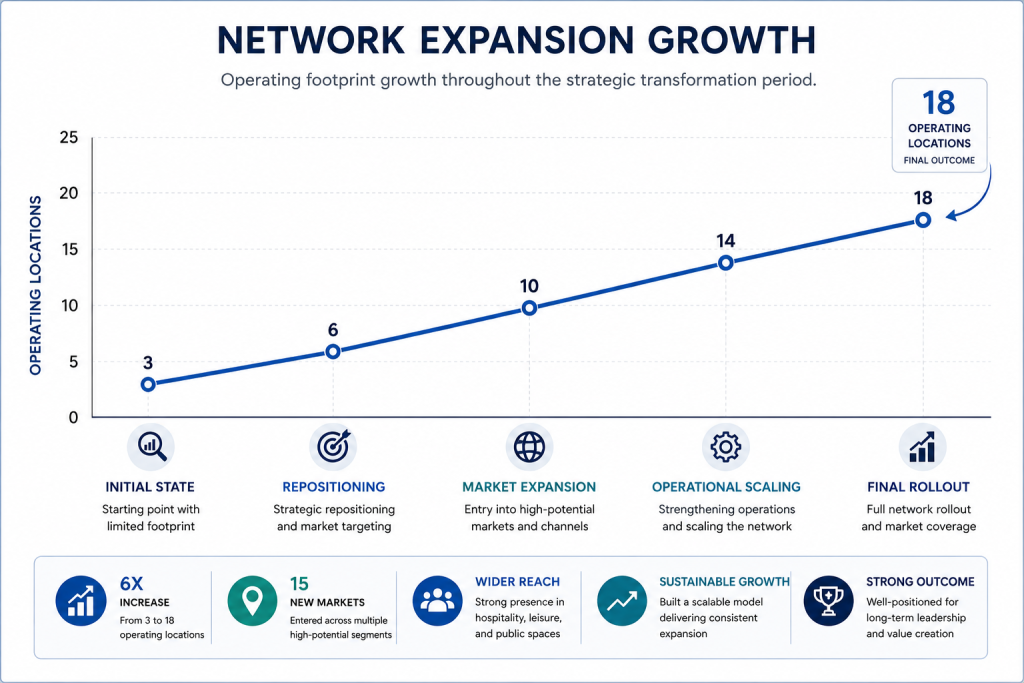
Network Expansion
One of the primary objectives was to establish a scalable operating footprint across high-potential locations.
During the first year of execution, the brand successfully expanded to:
- 18 operating locations
- Approximately 3–5 seasonal locations operating under short-term agreements
- A balanced mix of annual and temporary operating sites
Permanent locations provided long-term brand visibility and recurring customer traffic, while seasonal locations created flexibility and enabled participation in high-demand events, festivals, and tourism-focused activities.
This diversified location strategy improved market coverage while reducing dependency on any single sales channel.
Sales Growth Performance
Although the brand had generated only limited sales activity prior to the strategic repositioning initiative, measurable growth became evident throughout the implementation period.
Comparing performance between the early stages of execution and the twelfth month of operation, sales increased by approximately: 120%
This growth was achieved without relying on excessive discounting or short-term promotional tactics.
Instead, growth was driven by:
- Improved market positioning
- Better site selection
- Enhanced customer experience
- Stronger operational execution
- More effective utilisation of existing assets
The results demonstrated that sustainable growth often comes from strategic alignment rather than aggressive sales activity alone.
Asset Utilisation Improvement
Prior to the engagement, several valuable operational assets were either underutilised or generating limited commercial return.
Through the activation strategy, existing mobile food units, preparation equipment, and brand assets became central components of the customer experience and expansion model.
Rather than investing heavily in new infrastructure, growth was achieved largely by extracting greater value from assets that already existed within the business.
This significantly improved overall operational efficiency and return on investment.
Brand Value Creation
While increasing sales was an important objective, the broader strategic goal was to enhance the overall value of the business.
As market presence expanded and the operating model became more scalable, the brand’s perceived commercial value increased substantially.
The business evolved from a relatively limited operation into a recognised and growing platform with demonstrated market demand, proven operating systems, and attractive expansion potential.
Investor Outcome
The ultimate validation of the strategy came through the investor’s exit outcome.
Following the successful implementation of the growth strategy and the strengthening of the brand’s market position, the business was sold at a valuation that exceeded the investor’s original expectations.
According to the business owner, the final transaction value surpassed initial expectations by approximately: 35%
This outcome reflected not only improved sales performance, but also the increased strategic value created through positioning, market expansion, operational maturity, and brand development.
Key Strategic Lessons
This project reinforced several important principles that continue to apply across industries and business sectors:
- A strong product alone does not guarantee commercial success.
- Market selection is often more important than product selection.
- Underutilised assets can represent the greatest source of future growth.
- Customers remember experiences longer than products.
- Strategic positioning creates value long before marketing campaigns begin.
- Business growth becomes significantly easier when brand strengths, customer needs, and market opportunities are properly aligned.
Strategic Transformation Timeline
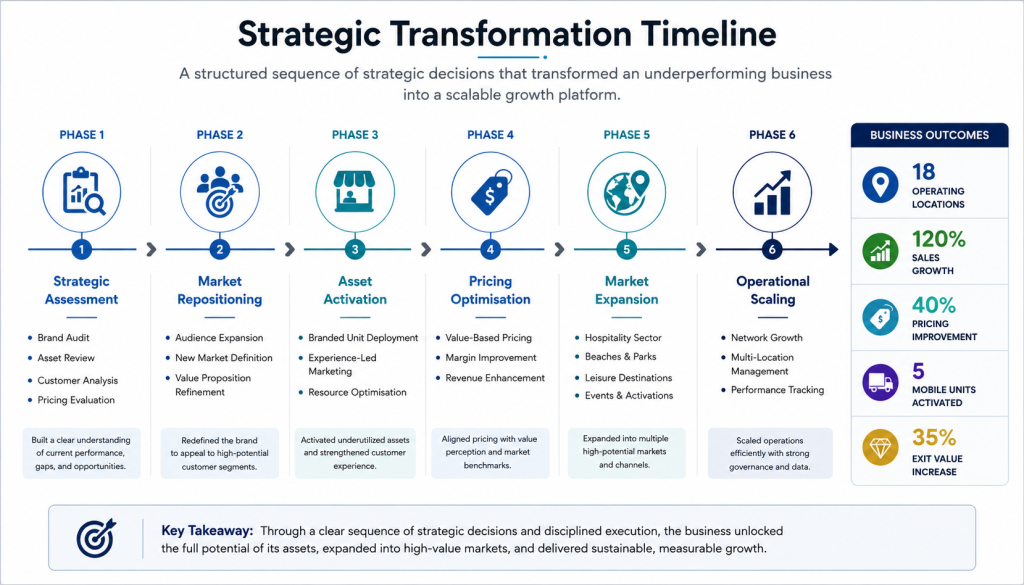
The transformation did not occur through a single initiative.
It was the result of a structured sequence of strategic decisions and disciplined execution activities implemented over a fourteen-month period.
The process began with a comprehensive assessment of the brand, operating assets, customer segments, pricing strategy, and market opportunities.
This was followed by a complete repositioning initiative that redefined the target audience, expanded the operating environment, activated underutilised assets, and strengthened the overall customer experience.
Once market validation was achieved through pilot activations and customer feedback, the business entered an accelerated expansion phase that led to increased visibility, stronger commercial performance, and a substantial increase in overall business value.
The project ultimately demonstrated how strategic repositioning, operational discipline, and experience-led brand building can transform an underperforming business into a scalable growth platform.
Conclusion
Looking back, the most important lesson from this project was that growth opportunities are not always hidden outside the business.
Very often, they already exist within the organisation itself.
In this case, the product remained largely unchanged.
The equipment remained the same.
The brand identity remained the same.
What changed was the way the business viewed its assets, customers, market opportunities, and overall positioning.
By challenging existing assumptions, redefining the target market, activating underutilised assets, improving customer experience, and executing a disciplined growth strategy, the business was able to unlock opportunities that had previously remained invisible.
The project reinforced a principle that continues to shape my approach to brand strategy and business growth:
Businesses rarely achieve sustainable growth by focusing exclusively on products.
They achieve sustainable growth when they create meaningful experiences, position themselves within the right markets, and align their resources with genuine customer demand.
The breakthrough was not created by changing the product.
The breakthrough was created by changing how the market experienced the brand.
And sometimes, that single strategic shift can transform the future of an entire business.
“The breakthrough was not created by changing the product. The breakthrough was created by changing how the market experienced the brand.”
About the Author
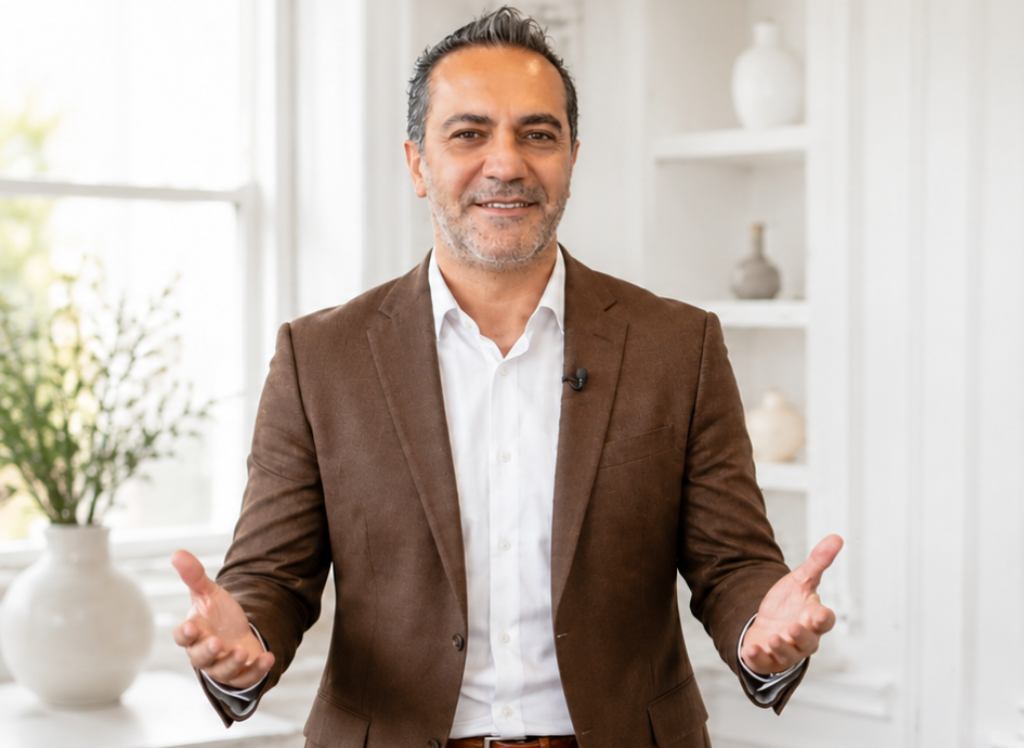
Muhannad Qtaishat | مهند القطيشات
Muhannad Qtaishat is a Brand Strategy Consultant and Business Growth Advisor with over 30 years of professional experience across multiple industries, including manufacturing, retail, hospitality, exhibitions, and private-label brand development.
His work focuses on helping organizations identify growth opportunities, strengthen market positioning, enhance customer experience, and develop scalable business and brand growth strategies.
Through this website, he shares practical insights, real business case studies, and strategic perspectives drawn from decades of hands-on professional experience.
Website: mqtaishat.com
مختص بإستراتيجيات العلامات التجارية والنمو التجاري، بخبرة تمتد لأكثر من 30 عاماً في بناء وتطوير الأعمال عبر قطاعات متعددة تشمل التصنيع، والتجزئة، والضيافة، والمعارض، وتطوير العلامات التجارية الخاصة.
على مدار مسيرته المهنية، قاد مبادرات نمو وتحول استراتيجي ساعدت الشركات على تحسين تموضعها التنافسي، وفتح أسواق جديدة، وتعزيز قيمة علاماتها التجارية، وتحقيق نمو تجاري مستدام.
في هذا الموقع، يشارك خبراته العملية من خلال دراسات حالة حقيقية، وتحليلات استراتيجية، وأفكار قابلة للتطبيق تساعد أصحاب الأعمال ورواد الأعمال على اتخاذ قرارات أكثر فاعلية وبناء علامات تجارية أكثر قدرة على النمو والتوسع.
Interested in unlocking hidden growth opportunities within your business?
Strategic growth often comes from repositioning existing strengths rather than creating entirely new products.
If you would like to discuss your brand, growth strategy, or market expansion plans, feel free to connect through the Contact page.