Executive Summary
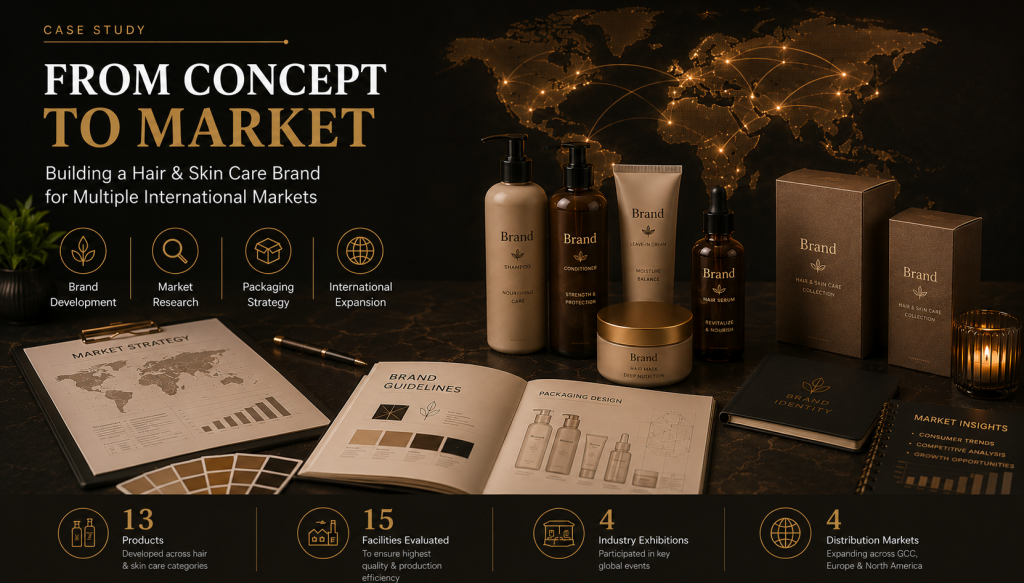
In 2022, a newly established Turkish company set out to launch a mid-premium professional hair and skin care brand with ambitions to serve multiple international markets, including Türkiye, Saudi Arabia, the UAE, Libya, the United Kingdom, and the USA.
The project extended beyond product development. The objective was to create a commercially viable brand capable of competing across markets with different consumer behaviors, purchasing preferences, regulatory requirements, and distribution structures.
The engagement covered market research, competitive analysis, brand naming, trademark registration, visual identity development, packaging strategy, brand guidelines, marketing strategy, website development, and market entry planning.
During the research phase, extensive analysis of target markets, competitors, manufacturers, and distribution channels revealed opportunities that led to expanding the original product portfolio from 9 products to 13 products. Industry visits, factory evaluations, and participation in major beauty exhibitions provided valuable insights that helped shape both the brand strategy and the market entry approach.
The project concluded with a complete product portfolio, an internationally registered trademark, approved packaging systems, a fully developed brand identity, a market entry strategy, a launched website, approval of the first production batch, and distribution agreements secured in multiple international markets.
This case study highlights the strategic process of building a brand from concept to market while preparing it for expansion across diverse international markets.
Key Results at a Glance
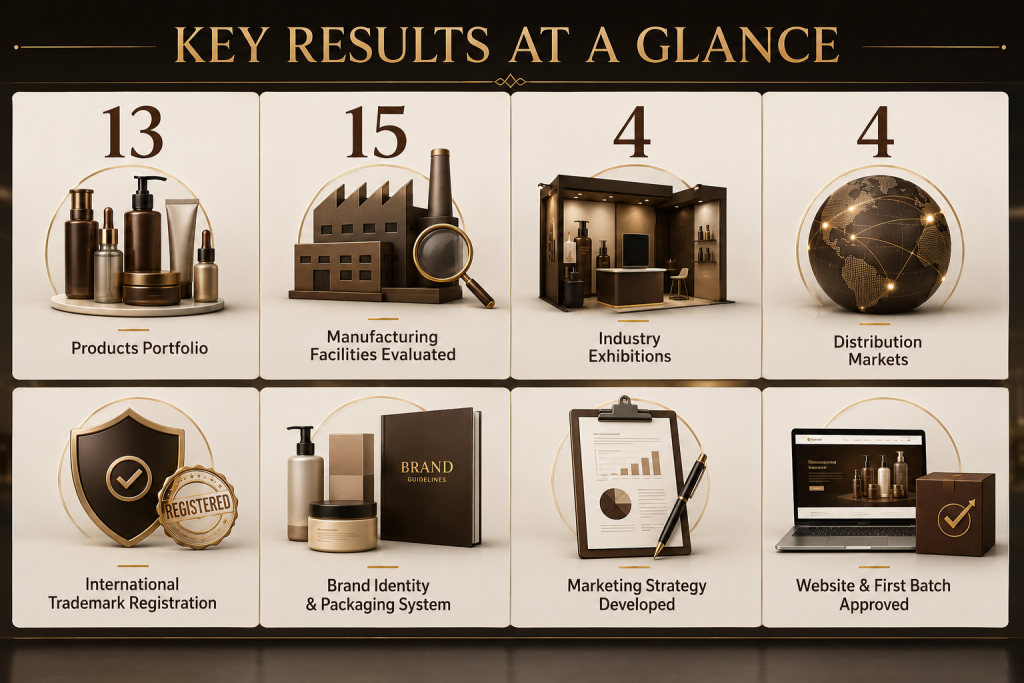
• Product Portfolio Expanded from 9 to 13 Products
• Approximately 15 Manufacturing Facilities Evaluated Across Türkiye
• Participation in 4 Major International Beauty Industry Exhibitions
• International Trademark Registration Completed
• Brand Identity, Packaging System, and Brand Guidelines Developed
• Comprehensive Market Research and Marketing Strategy Completed
• Distribution Agreements Secured in Saudi Arabia, the United Kingdom, the USA, and Libya
• Website Launch and First Production Batch Approval Completed
“The objective was not to launch another beauty brand. The objective was to build a market-ready brand platform capable of competing across multiple international markets.”
The Initial Challenge
Although the company had access to manufacturing capabilities through an established production partner, the business itself was starting from zero as a brand.
There was no market presence, no customer base, no distribution network, and no existing brand equity.
The challenge was not developing a single product. The challenge was creating an entire brand ecosystem capable of serving multiple international markets with different customer expectations, purchasing behaviors, regulatory requirements, and competitive environments.
The original plan included launching a portfolio of 9 products targeting both hair care and skin care categories.
However, before any product decisions were finalized, it became clear that a deeper strategic assessment was required.
Launching a new brand across Türkiye, Saudi Arabia, the UAE, Libya, the United Kingdom, and the USA required more than product development. It required a clear understanding of market demand, consumer behavior, competitive positioning, distribution structures, product preferences, pricing expectations, and packaging requirements across multiple regions.
The objective became clear:
Build a commercially viable brand capable of competing across diverse international markets while creating a foundation for long-term growth and distributor expansion.
Market Research and Industry Insights
Before developing the final product portfolio, brand positioning strategy, and market entry plan, a comprehensive research phase was conducted to evaluate the opportunities and challenges across the target markets.
The objective was to understand not only customer needs, but also competitor positioning, manufacturing capabilities, distribution structures, product trends, packaging expectations, and market-specific purchasing behaviors.
A multidisciplinary project team was assembled, consisting of branding specialists, market researchers, designers, business strategists, product development professionals, laboratory consultants, and legal advisors.
As part of the assessment process, approximately 15 manufacturing facilities were visited across different regions of Türkiye. These visits provided valuable insights into product categories, production capabilities, formulation options, quality standards, packaging technologies, and emerging industry trends.
The research phase also included participation in four major industry exhibitions in both Türkiye and the UAE.
These events provided direct exposure to international brands, distributors, retailers, manufacturers, suppliers, and market trends across the beauty and personal care industry.
Particular attention was given to understanding the requirements of professional salon products, distributor expectations, product positioning strategies, and regional differences in customer behavior.
The objective was not simply to create products.
The objective was to create a brand capable of competing effectively across multiple international markets.
The Turning Point: Beauty World Dubai
While factory visits and market research provided valuable operational insights, the project’s most significant strategic turning point came during participation in Beauty World Dubai.
The exhibition brought together leading international brands, distributors, manufacturers, retailers, and industry professionals from multiple regions.
For the project team, the event provided an opportunity to observe firsthand how brands positioned themselves across different markets and customer segments.
Several important observations emerged during the exhibition.
The first was the significant difference between consumer expectations across regions.
In many Gulf markets, packaging quality and visual presentation played a major role in shaping customer perception and purchase decisions. Premium-looking packaging was often associated with product quality, credibility, and brand value.
In contrast, many European buyers placed greater emphasis on product performance, formulation quality, certifications, and ingredient transparency, with less focus on luxury packaging.
The second observation was the variation in product demand across different markets.
Certain product categories showed stronger demand in Gulf and Arab markets, while other products demonstrated greater relevance within European markets.
The third observation involved distributor expectations.
Distributors were not simply evaluating individual products. They were evaluating the overall strength of the product portfolio, the commercial positioning of the brand, the consistency of the visual identity, and the long-term growth potential of the business.
These findings led to a broader strategic reassessment of the project.
The original concept was refined, the product portfolio was expanded, and several branding, packaging, and market-entry decisions were revisited to better align the brand with the realities of international market demand.
The exhibition ultimately became a catalyst for strengthening the brand’s commercial foundation before launch.
Expanding the Product Portfolio
One of the most significant outcomes of the research and assessment phase was the decision to expand the original product portfolio.
The initial launch plan included 9 products across the hair care and skin care categories.
However, as market analysis progressed and additional insights were gathered through factory visits, competitor benchmarking, distributor discussions, and industry exhibitions, it became evident that several high-potential product opportunities were not being addressed within the original portfolio.
The objective was not simply to increase the number of products.
The objective was to build a more complete and commercially attractive product ecosystem capable of serving the needs of distributors, professional salons, retailers, and end consumers across multiple markets.
Several product categories demonstrated stronger demand within Gulf markets, while others showed greater relevance in European markets.
Consumer preferences, hair characteristics, skincare habits, climate conditions, and purchasing behaviors varied considerably between regions.
These differences highlighted the importance of building a broader product offering capable of supporting market-specific opportunities without compromising brand consistency.
Following a detailed review, the portfolio was expanded from 9 products to 13 products.
The expanded range strengthened the commercial positioning of the brand, improved distributor appeal, increased cross-selling opportunities, and provided greater flexibility when entering diverse international markets.
Rather than launching a limited product range and expanding later, the decision was made to establish a stronger foundation from the beginning, allowing the brand to enter the market with a more competitive and scalable offering.
Building the Brand Foundation
With the market assessment completed and the product portfolio defined, the focus shifted toward building the brand’s strategic foundation.
The objective was to create a brand capable of operating across multiple international markets while maintaining a consistent identity, clear positioning, and long-term scalability.
The process began with the development and evaluation of potential brand names.
Several naming concepts were assessed based on trademark availability, international suitability, memorability, pronunciation, and alignment with the desired market positioning.
Following the selection process, the chosen brand name was registered through specialized trademark professionals in both Türkiye and international markets.
The visual identity development phase included logo design, color systems, typography standards, packaging architecture, and the creation of comprehensive Brand Guidelines to ensure consistency across all customer touchpoints.
Particular attention was given to packaging strategy.
Research had demonstrated that packaging expectations varied considerably across target markets.
While premium packaging played a significant role in customer perception within Gulf markets, many European buyers placed greater emphasis on product quality, certifications, and practical usability.
As a result, the final packaging direction balanced professional presentation with commercial practicality.
The objective was to create packaging that communicated quality and credibility while remaining commercially viable across multiple international markets.
This balanced approach helped position the brand within the mid-premium segment while maintaining flexibility for future expansion and distributor growth.
Market-Specific Consumer Insights
One of the most valuable lessons from the project was the realization that a single product portfolio could not be presented in exactly the same way across all target markets.
Although the brand maintained a consistent identity, the research revealed meaningful differences in customer expectations, purchasing behaviors, product preferences, and buying motivations across regions.
In Gulf markets, packaging quality and visual presentation played a significant role in shaping customer perception. Consumers often associated premium packaging with higher product quality, stronger brand credibility, and greater value.
In contrast, many buyers in European markets placed greater emphasis on product formulation, ingredient transparency, certifications, and product performance, with less focus on luxury packaging.
The research also highlighted differences in product demand.
For example, certain hair treatment categories demonstrated stronger demand in Gulf markets, while other product categories showed broader appeal across European markets. These differences reinforced the importance of market-specific product planning rather than relying on a uniform international approach.
Certain hair care categories demonstrated stronger commercial potential within Gulf markets due to regional consumer preferences and hair characteristics. Other product categories showed broader appeal across European markets, where purchasing decisions were often influenced by different usage habits and product priorities.
These insights reinforced the importance of adapting market-entry strategies to local market realities rather than assuming that customer expectations would be identical across regions.
The findings influenced several strategic decisions, including packaging direction, portfolio structure, positioning priorities, distributor presentations, and market-specific marketing recommendations.
Rather than building products first and searching for customers later, the project focused on understanding customers before making critical brand and portfolio decisions.
This approach ultimately strengthened the brand’s ability to compete across multiple international markets while maintaining a consistent strategic identity.
Market Entry and Distribution Strategy
Building a strong brand was only one part of the project.
The second challenge was developing an effective market entry strategy capable of supporting international expansion.
From the early stages of the project, it became clear that the long-term success of the brand would depend not only on product quality and brand positioning, but also on the ability to establish reliable distribution channels across target markets.
The market entry strategy focused primarily on two channels:
• Master Distributors
• E-Commerce
The distributor model was selected as a priority because it offered access to established market knowledge, existing customer networks, local regulatory expertise, and operational infrastructure within each target country.
At the same time, e-commerce was viewed as an important complementary channel that could support brand visibility, customer accessibility, and future growth opportunities.
Throughout the research phase, significant effort was dedicated to understanding distributor expectations, evaluating potential market partners, and identifying the factors that influence distributor decision-making when assessing new brands.
Industry exhibitions, business meetings, market visits, and direct engagement with industry professionals provided valuable opportunities to introduce the brand concept, gather feedback, and build commercial relationships.
The objective was not simply to secure distributors.
The objective was to position the brand as a commercially attractive opportunity supported by a clear market strategy, a well-structured product portfolio, professional branding, and long-term growth potential.
By the conclusion of the project, distribution agreements had been secured in multiple international markets, providing the brand with an initial foundation for market entry and future expansion.
Project Outcomes
By the end of the engagement, the project had evolved from an initial business concept into a fully developed brand platform prepared for international market entry.
The work completed throughout the project established the strategic, commercial, and operational foundations required to support future growth across multiple markets.
Several key outcomes were achieved during the engagement.
The original product portfolio was expanded from 9 products to 13 products following extensive market analysis and competitive assessment.
The brand name was selected and successfully registered through the appropriate trademark processes in Türkiye and international markets.
A complete visual identity system was developed, including logo design, packaging architecture, brand guidelines, and supporting brand assets.
Comprehensive market research, competitive analysis, and marketing strategy frameworks were completed to support future expansion activities.
The website was developed and prepared as part of the brand’s digital presence and market entry infrastructure.
The first production batch was reviewed, refined, and approved following multiple rounds of packaging evaluation and quality control adjustments.
Most importantly, distribution agreements were secured in several international markets, including Saudi Arabia, the United Kingdom, the USA, and Libya, providing the brand with an initial commercial footprint beyond its home market.
Collectively, these outcomes transformed the project from a product development initiative into a market-ready brand prepared for regional and international expansion.
Strategic Lessons
One of the most important lessons from this project was that building a successful brand requires far more than developing quality products.
Product quality remains essential, but quality alone is rarely sufficient to support international growth.
The project demonstrated that customer expectations, purchasing behaviors, product preferences, packaging perceptions, and distributor requirements can vary significantly from one market to another.
Assumptions that may be valid in one country may not necessarily apply in another.
The experience also reinforced the importance of conducting thorough market research before making critical decisions related to product development, portfolio structure, packaging, positioning, pricing, and distribution.
Several strategic decisions that shaped the final outcome of the project were made only after extensive market analysis, industry visits, competitive assessments, and direct engagement with distributors and industry professionals.
Perhaps the most valuable lesson was that strong brands are built around customer understanding rather than product assumptions.
It is determined by how well it understands the customers and markets it intends to serve.
“The strength of a brand is not determined by the quality of its products alone. It is determined by how well it understands the customers and markets it intends to serve.”
Conclusion
Building a brand for multiple international markets is a complex process that extends far beyond product development.
It requires a clear understanding of customer needs, market dynamics, competitive landscapes, distribution structures, regulatory requirements, and long-term growth opportunities.
This project demonstrated the importance of combining strategic research, market intelligence, brand development, and commercial planning before entering new markets.
By the end of the engagement, a new Turkish hair and skin care brand had evolved from an initial concept into a market-ready business platform supported by a defined product portfolio, a registered trademark, a complete brand identity system, a market entry strategy, approved production assets, and international distribution agreements.
While every market presents unique challenges, one principle remained consistent throughout the project:
Successful brands are built by understanding the market first and developing the brand around those insights, not the other way around.
نبذة عن المقال بالعربية
دراسة حالة متخصصة في بناء علامة تجارية لمنتجات العناية بالشعر والبشرة، تشمل مراحل تطوير العلامة التجارية من اختيار الاسم التجاري وتصميم الهوية البصرية وتطوير التغليف، إلى دراسة الأسواق المستهدفة وتحليل المنافسين وإعداد استراتيجية التسويق وخطة دخول الأسواق الدولية. تستعرض الدراسة تجربة عملية في تطوير 13 منتجاً للعناية بالشعر والبشرة، وبناء شبكة توزيع دولية، والتوسع في أسواق الخليج وأوروبا والولايات المتحدة، مع التركيز على استراتيجيات بناء العلامات التجارية، تطوير المنتجات، اختيار الموزعين، وتخطيط النمو التجاري للأسواق العالمية.
عداد: مهند القطيشات
Muhannad Qtaishat
If your business is facing growth challenges despite having strong products or market demand, strategic alignment may be the missing piece.
For strategic consulting inquiries:
Contact via mqtaishat.com
About the Author
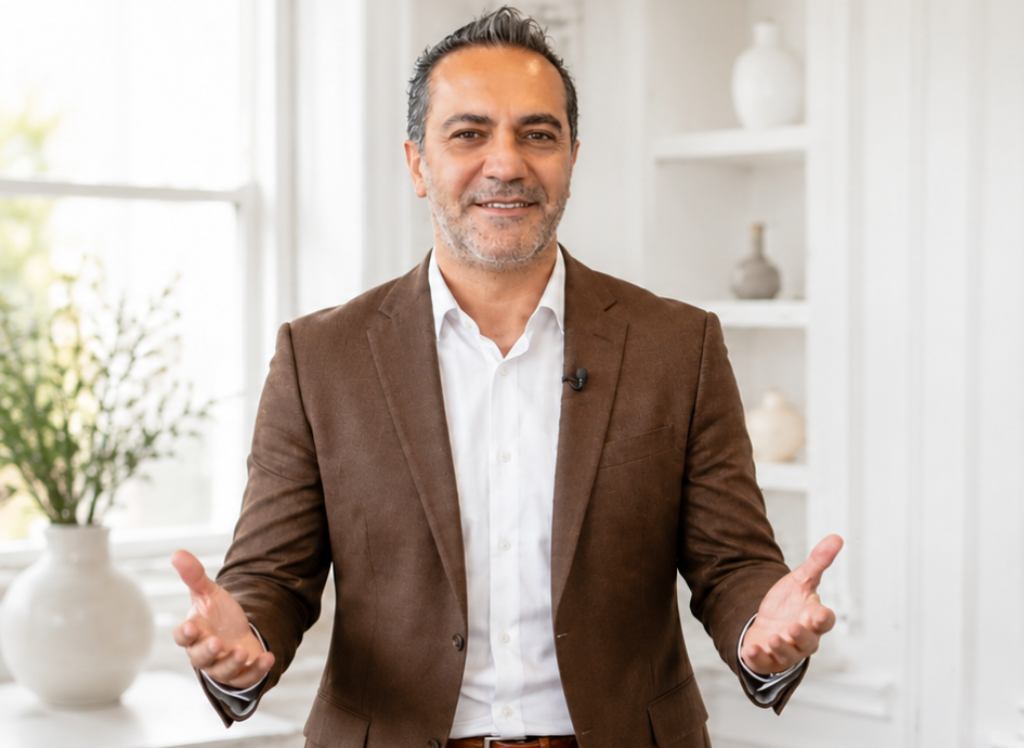
Muhannad Qtaishat is a Brand Strategy Consultant, Business Growth Advisor, and Marketing Professional with extensive experience in business transformation, strategic planning, sales development, operational excellence, and scalable growth strategies across multiple industries in the Middle East.
مهند القطيشات هو استشاري استراتيجيات العلامات التجارية وتطوير الأعمال، متخصص في بناء استراتيجيات النمو، تحسين الأداء التشغيلي، تطوير المبيعات، وتحويل الأفكار والمشاريع إلى علامات تجارية قابلة للنمو والتوسع
Read more insights by Muhannad Qtaishat on www.mqtaishat.com